Render Engine Rewrite
From serial bottlenecks to parallel job types
I rewrote a production render pipeline used for post-event video delivery. The legacy flow forced users to wait for every processing step to finish before a video could be marked ready. The rewrite split critical and non-critical work into separate job paths, reduced ready-time to under two minutes, and moved runtime infrastructure from a Windows service to Dockerized workers.
Key Metrics
Render time before
20+ min
Render time after
< 2 min
Deployment model
Windows svc -> Docker
Before vs After
Before
Synchronous- Download raw sources from live stream
- Normalize and stitch multiple files
- Generate intro slate (if selected)
- Compress for player delivery
- Upload player version to storage
- Compress for archive storage
- Upload archive version
- Run copyright detection on audio
- Extract and store flagged segments
-> Video marked ready only after all 9 steps
After
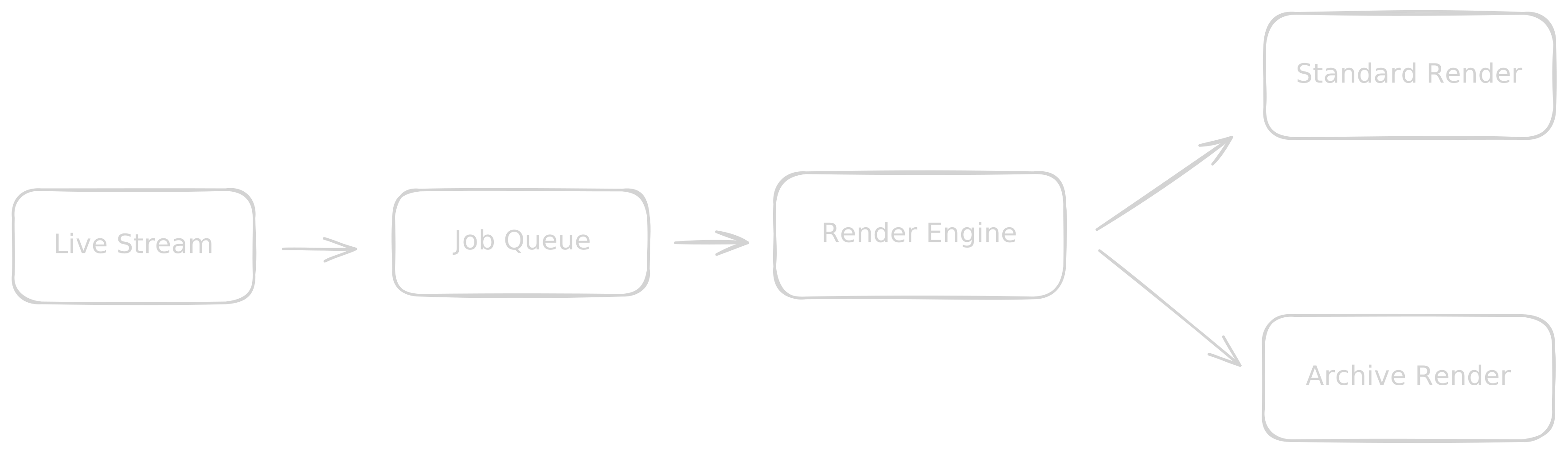
Parallel job typesStandard render (critical path)
- Download and stitch sources
- Normalize audio and bitrates
- Generate intro slate (if selected)
- Compress and upload player version
-> Video marked ready here
Archive render (background)
- Compress and upload archive version
- Copyright audio detection
- Extract and store flagged segments
System Flow
Key Decisions
Split on urgency, not process type
Archive compression and copyright detection are valuable, but they do not share the same deadline as player readiness. Reframing work by urgency removed non-critical tasks from the blocking path and made the "ready to watch" milestone both faster and more predictable.
Treat job types as an extension point
I introduced an explicit job model so new render variants could be added without changing core orchestration. That abstraction later supported ISO and audio-only outputs while preserving the existing pipeline contracts.
Docker over Windows service runtime
Moving FFmpeg and codec dependencies into the container image aligned dev, staging, and production behavior. Operations shifted from VM-level provisioning to container-level scaling, with cleaner rollback and better incident recovery characteristics.